

Bad breath is often the first sign of periodontal problems, but dental disease goes much deeper. If your pet has tartar buildup, red gums, or trouble eating, it may already be affecting their overall health.
At Community Animal Care, our Poughkeepsie veterinarians provide cat and dog teeth cleaning to treat and prevent dental disease before it leads to pain, infection, or organ complications. Our approach focuses on early detection, safe treatment, and long-term prevention, so your pet can stay comfortable and healthy.
If you’ve noticed changes in your pet’s breath, eating habits, or behavior, schedule a dental exam today at (845) 471-7459.
When Does My Pet Need a Professional Teeth Cleaning?
If your pet is showing signs of dental disease, a professional cleaning is likely needed.
You should schedule a visit if your pet:
Has bad breath that doesn’t improve
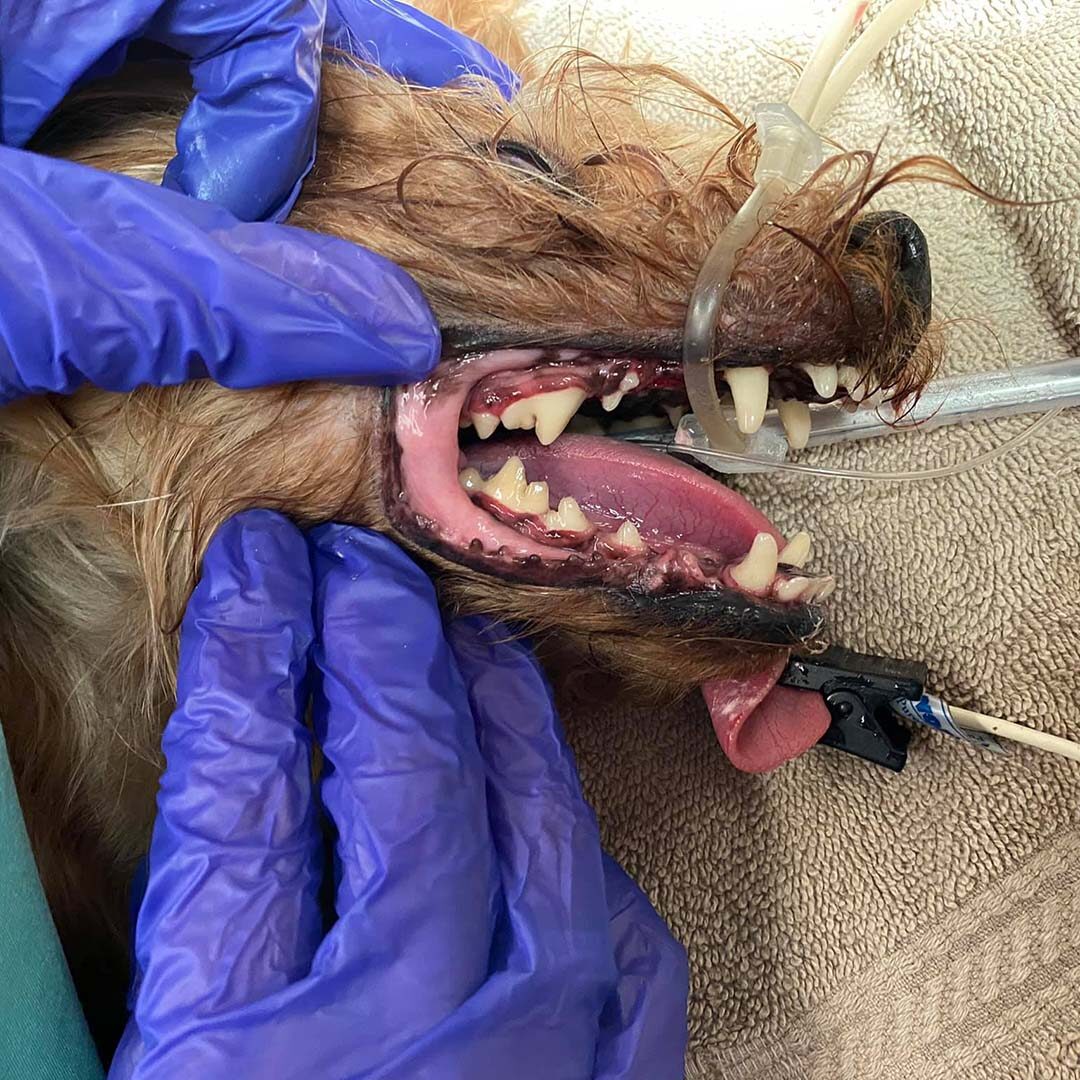
Shows yellow or brown tartar buildup on teeth
Has red, swollen, or bleeding gums
Is dropping food, chewing on one side, or avoiding hard food
Seems more irritable or withdrawn
Has never had a professional dental cleaning
Dental disease is extremely common. By age three, up to 90% of dogs and cats already have some level of periodontal disease.
The Importance of Regular Dental Care for Your Pet’s Overall Health
Dental disease doesn’t stay in the mouth. Bacteria from infected gums can enter the bloodstream and affect vital organs.
If left untreated, dental disease can lead to:
Chronic pain and inflammation
Tooth loss
Jaw bone damage
Heart, liver, and kidney complications
This is why professional dental care is about more than clean teeth; it helps protect your pet’s long-term health and comfort.
What Happens During a Professional Teeth Cleaning?
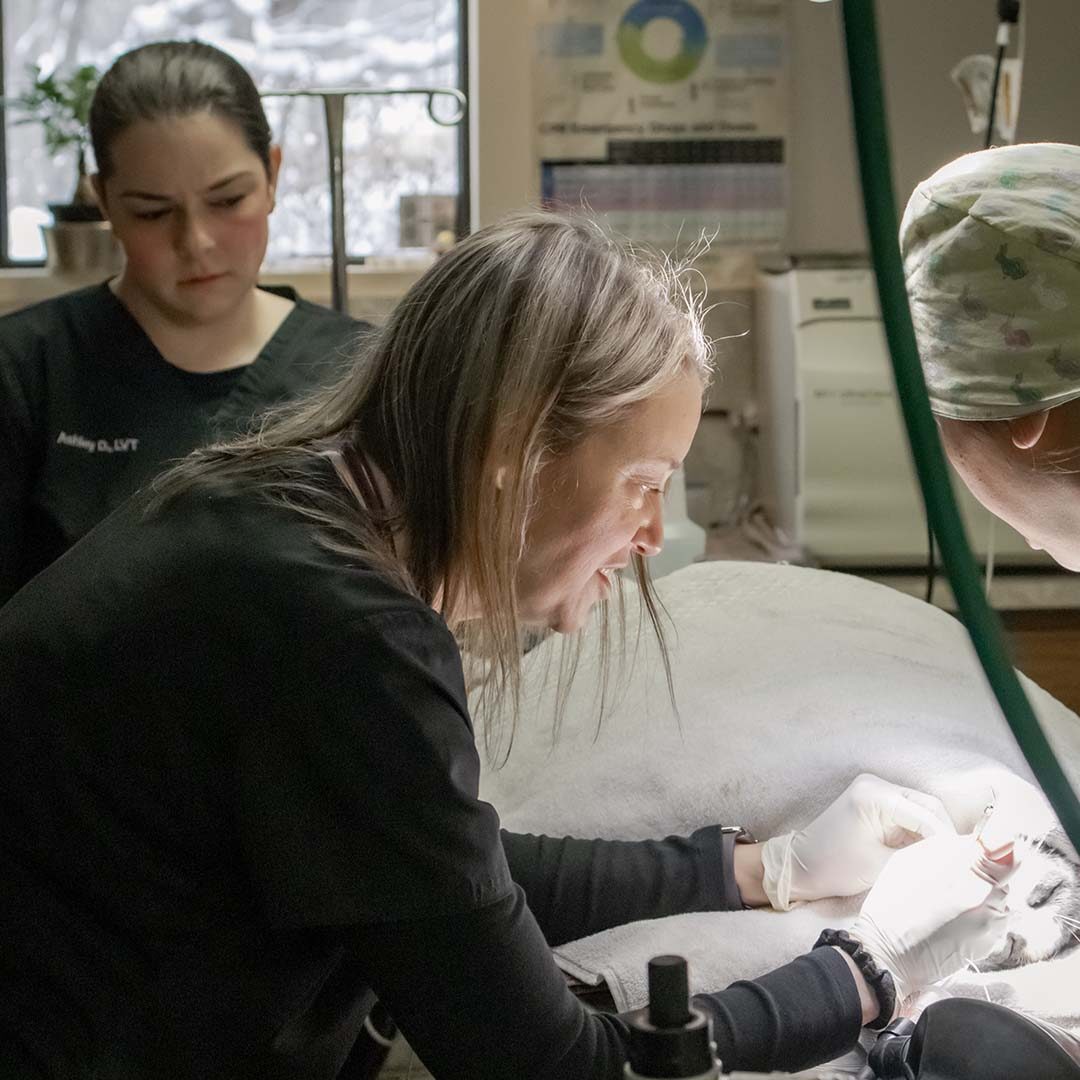
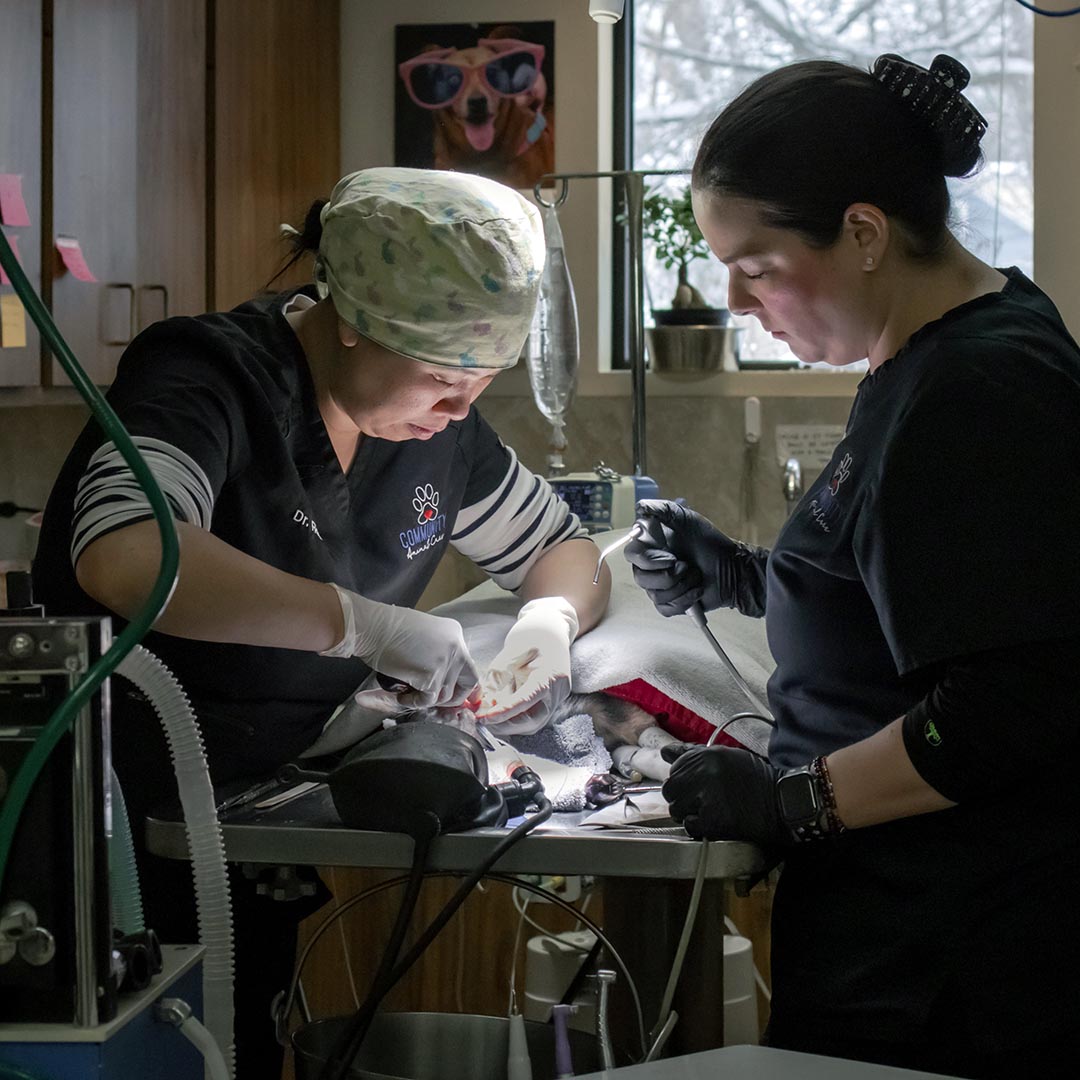
A proper dental cleaning involves much more than what you can see above the gumline. During your pet’s dental procedure, our veterinary team will:
Perform a comprehensive oral exam under anesthesia
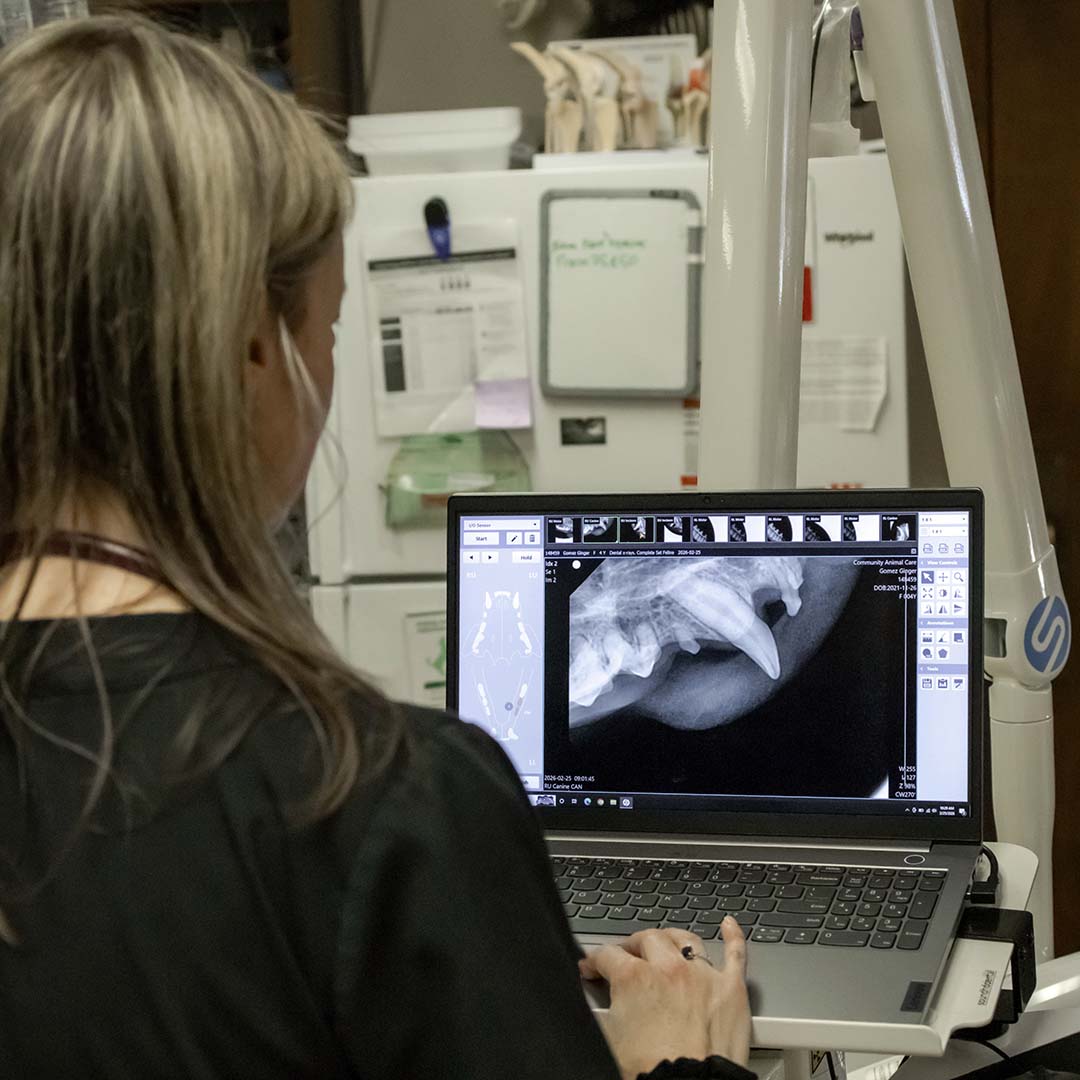
Take dental X-rays to evaluate the roots and bone below the surface
Remove plaque and tartar above and below the gumline
Polish teeth to help slow future buildup
Address any infected or damaged teeth, including extractions if needed
What Symptoms Should I Watch for at Home?
Dental disease often develops gradually, so subtle changes are important clues as to what is happening in your pet’s mouth. Watch for:
Persistent bad breath
Pawing at the mouth
Drooling more than usual
Visible tartar buildup
Swelling around the face or jaw
Changes in appetite or chewing behavior
If your pet is experiencing any of these signs, it’s time to schedule a dental evaluation.
What Should I Expect After My Pet’s Dental Procedure?
Most pets recover quickly after a dental cleaning, even if extractions are needed.
After the procedure:
Your pet may be slightly sleepy for the rest of the day
We may prescribe pain medication or antibiotics if needed
You’ll receive clear at-home care instructions
Most pets return to normal eating and behavior within a day or two, but may require softened food for the first couple of days
Give Your Pet a Healthier, More Comfortable Future
Dental issues can quietly affect how your pet eats, plays, and feels each day. Addressing them early helps prevent unnecessary discomfort and more complex problems down the road. If it’s been awhile since your pet’s last professional dental treatment, our team will evaluate your pet’s oral health and guide you toward the right next step.
If something doesn’t seem quite right, or it’s simply time for a routine cleaning, schedule a visit at (845) 471-7459.